OpenClaw Gateway
OpenClaw Gateway
The Gateway is the central control plane in OpenClaw's hub-and-spoke architecture. It routes messages from all inbound sources (channel adapters, control interfaces) to the Agent Runtime and returns responses.
Binding & Network
- Process: Node.js 22+
- Default bind:
127.0.0.1:18789(loopback-only; no external exposure by default) - This loopback binding is the first layer of OpenClaw's Security Model
Hub-and-Spoke Design
Channel Adapters ─┐
                  ├─→ Gateway (control plane) ─→ Agent Runtime
Control Interfaces┘
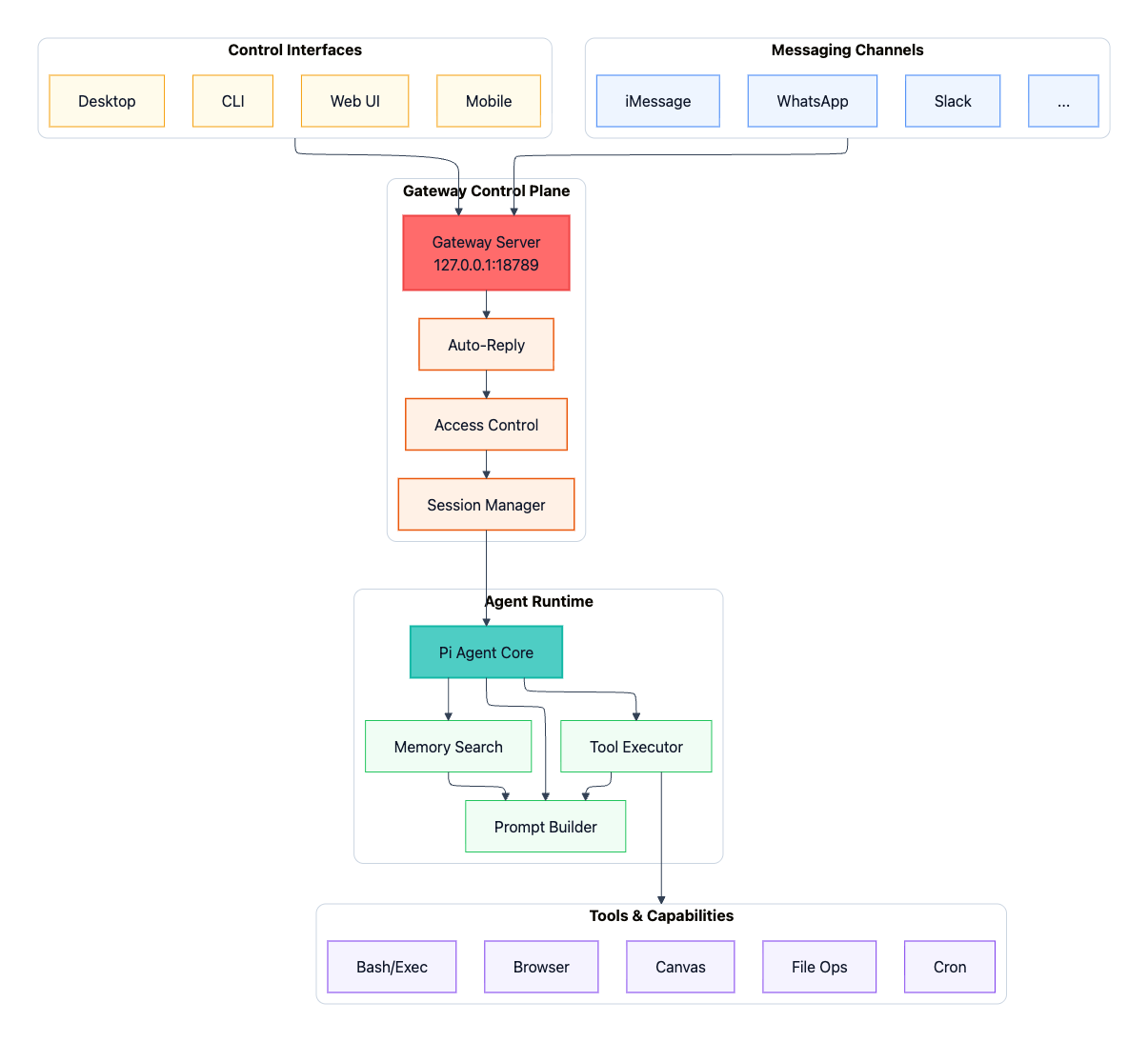
All traffic passes through the Gateway; adapters and interfaces do not talk to the runtime directly.
Channel Adapters
Platform-specific connectors that handle:
- Authentication with the upstream platform
- Message parsing and normalization
- Access control (allowlists per channel)
- Response formatting per platform conventions
Supported platforms: WhatsApp, Telegram, Discord, Slack, iMessage, and others.
Control Interfaces
Human-facing surfaces that connect to the Gateway:
- Web UI — browser-based interface
- CLI — command-line access
- macOS app — native menu bar application
- Mobile nodes — lightweight mobile clients
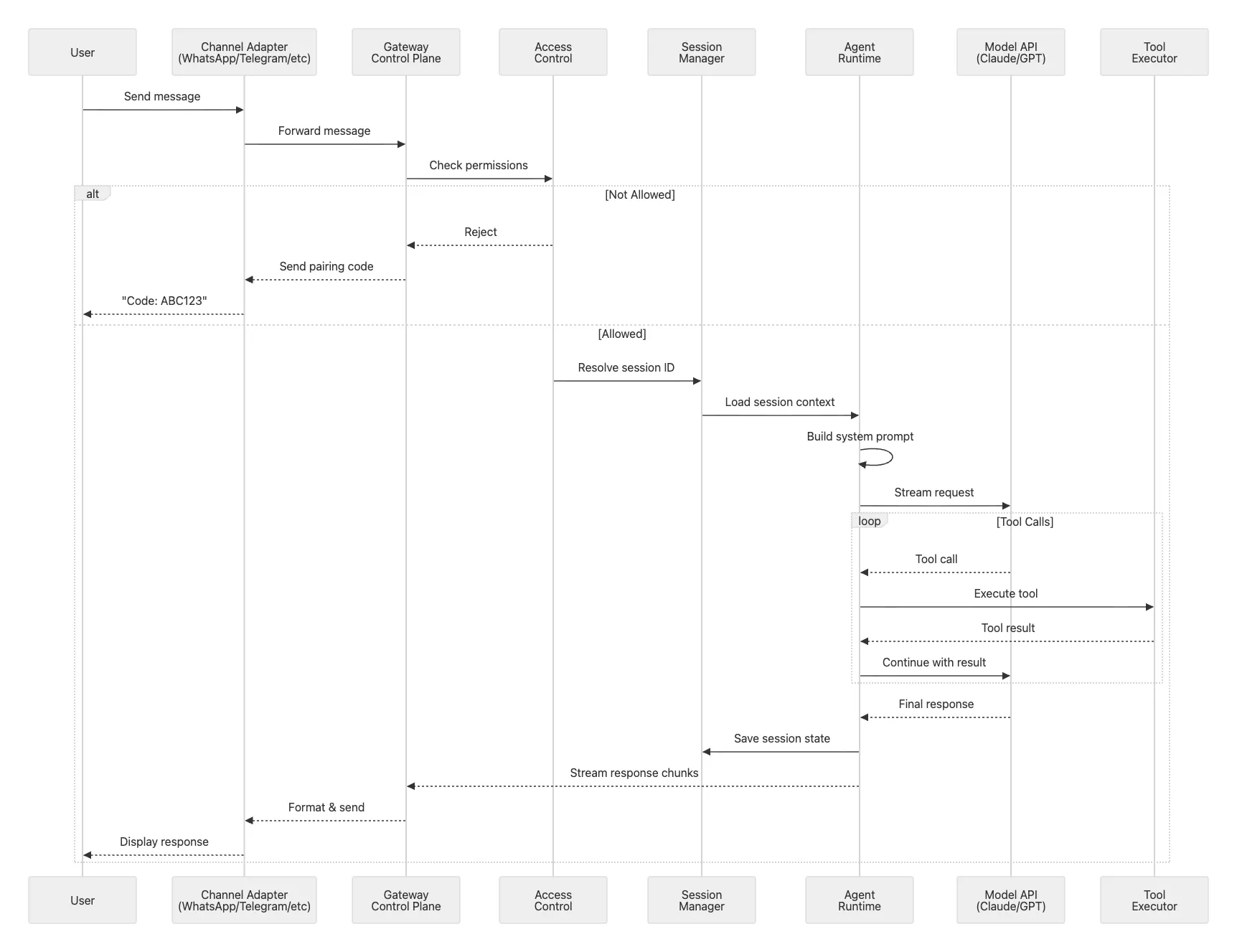
Six-Phase Execution Flow
Each inbound message traverses these phases inside the Gateway + Runtime:
| Phase | Description |
|---|---|
| 1. Ingestion | Message received from channel adapter or control interface |
| 2. Access control & routing | Auth check, channel allowlist, session lane assignment |
| 3. Context assembly | Session history + system prompts + memory retrieval (see Context Assembly) |
| 4. Model invocation | Assembled context sent to LLM |
| 5. Tool execution | Tool calls dispatched, results collected |
| 6. Response delivery | Formatted reply routed back through originating adapter |
Plugin System
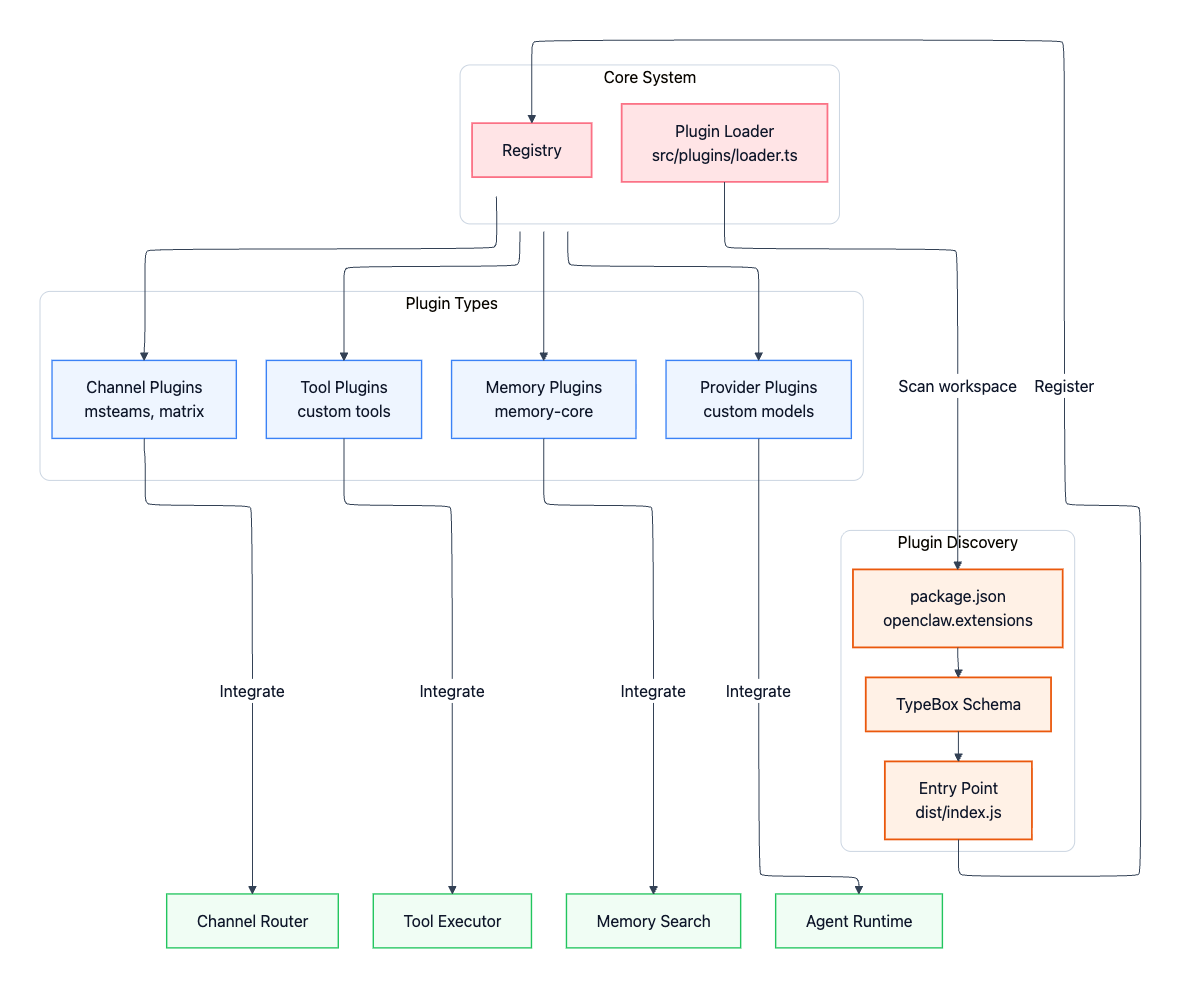
Extension points exposed by the Gateway for channels, memory systems, tools, and provider plugins.
Multi-Agent Routing
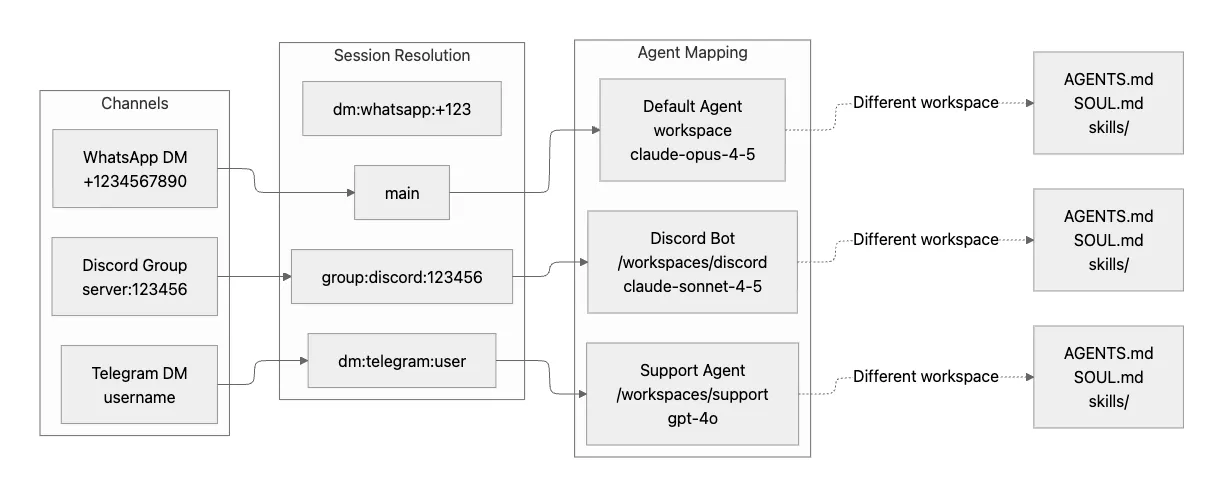
Different channels can be routed to isolated agent instances with independent workspaces and models.
Related
- Agent Loop (OpenClaw) — inner loop mechanics (phases 3–5 in detail)
- Context Assembly — how context is built in phase 3
- Security Model — full layered security stack
- Command Queue — session-lane queuing between ingestion and execution
- OpenClaw Hooks — hook points along this flow
- OpenClaw — entity overview